

 Calvin Walker
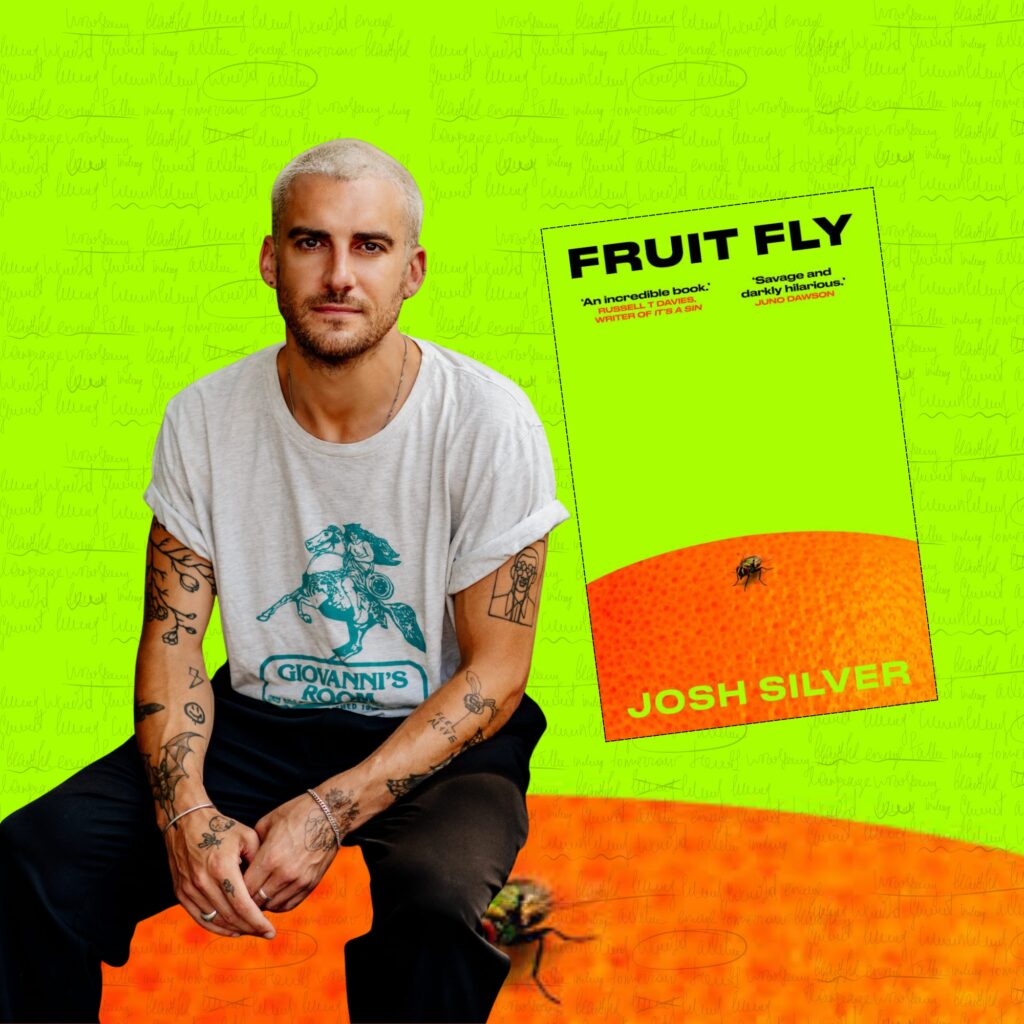
About once or twice a year, a book by an ‘unknown’ dominates conversations and makes a star out of its writer. That’s exactly what happened with Josh Silver and his debut novel for adults, Fruit Fly.
Gays spent the summer drooling all over him on social media. Was it because of his writing? I’m sure that played a role, but something tells me him fitting the conventional idea of what ‘attractiveness’ is in this community was a factor, too.
While on a trip to Paris this past September, I figured I’d see if I could find a copy of the book people couldn’t stop posting about. I figure it’d be easy since I’d seen the book cover in enough posts that it was all but burned in my brain (thanks, Hayley Warnham). It was at The Red Wheelbarrow that I obtained my copy.
“Why not,” I thought to myself. “Even if it’s shit, at least the cover is stunning. It’ll look good in content and will stand out in your bookshelves.”
Upon returning to the States, I read Fruit Fly in about a week. I understood the hype. Silver delivered a good read and. What stood out the most to me wasn’t the prose, but a very clear literary device implemented to build a limited, yet intriguing world. The book alternates between the perspectives of Mallory and Leo and, after the second or third switch, I thought “Oh, we’ve got us a case of mirror characters!”
Mirror characters often share a shortlist of qualities (ie: trauma, revenge, etc.). Because of this, they often complement each other in subtle ways. This is where the fun comes in because mirror characters are not carbon copies of another, yet their goals are related. They stand on the same foundation and help reinforce the core theme in a narrative even if that journey looks vastly different from one another.
Another way of using this type of device is by creating foil characters. These are two or more character who have stark differences in values, attitudes, and/or desires. Even if their journeys are on similar paths, they will typically exist on opposite ends of the spectrum in terms of how they are presented.
Foil characters are very common because of how easily they bring in diverse voices. You could have the novice/sage pairing, the geek/jock, or, of course, the hero/villain.
With Fruit Fly, we have Mallory, a white woman living a privileged life with her husband who works for Netflix. Then there’s Leo, the gay drug addict living under a bridge and turning tricks just to get by. One wouldn’t be entirely wrong in saying they are foils. However, the brilliance of how Silver wrote these two people can be found in the details kept tucked just under the hood.
One reason why they’re mirror characters? Fear.
We meet Leo as he’s confronting the fact that the lifestyle he’s adopted might literally end his life. Mallory, on the other hand, is a writer who’s afraid she’s ‘peaked’ with her hit debut novel. Take her occupation away, and this is a very relatable thing for people in the workplace.
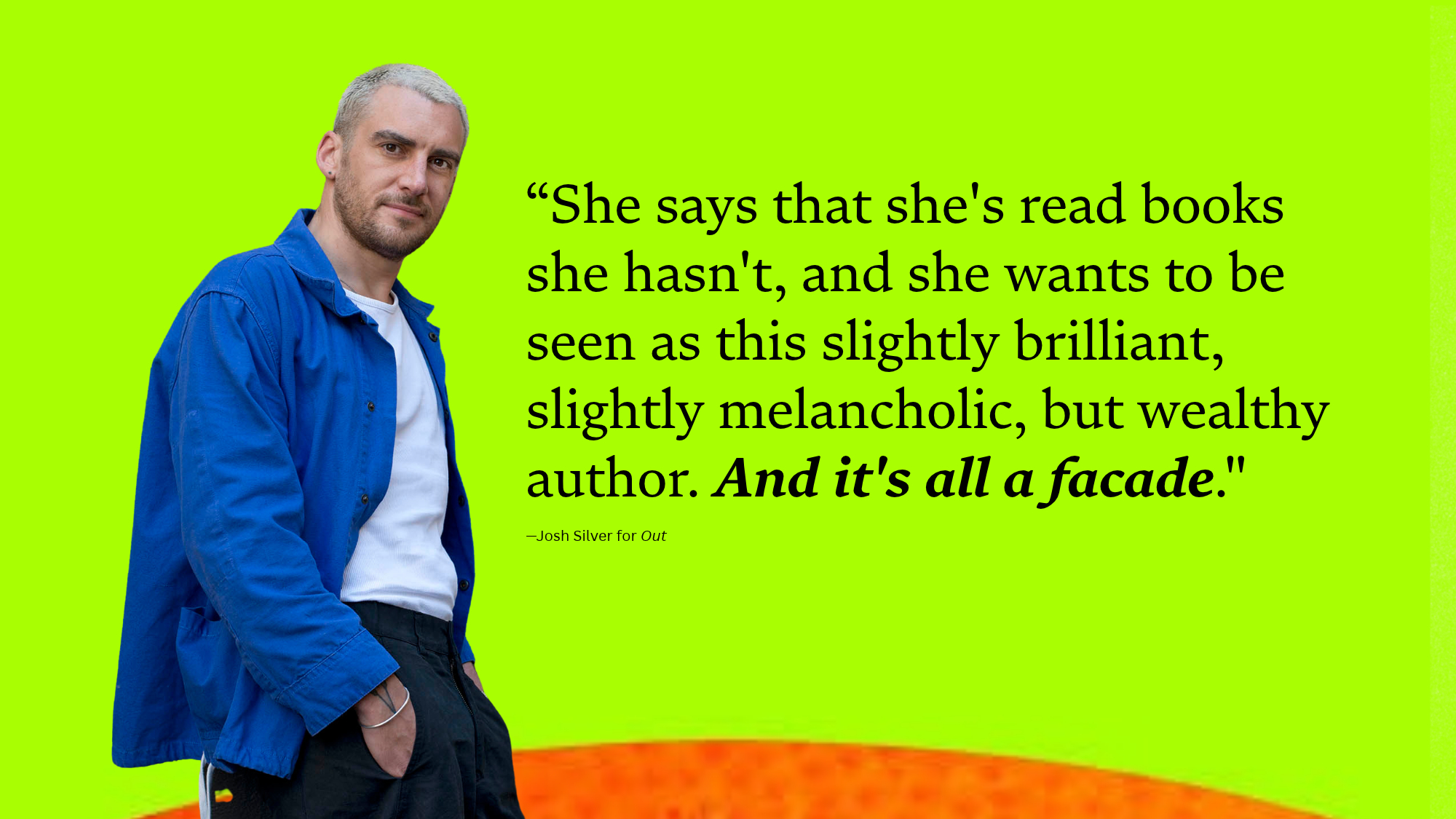
“I really relate to [Mallory’s] desire to be validated externally and be seen as successful,” Silver says in an interview for Out. “That’s a journey I’ve been on myself as an actor and as a creative, wanting to feel like everything’s in order by having a home that looks fantastic; for people to look at her and envy her, but being on the inside, still in an incredible amount of pain, but not really knowing where the pain’s coming from; feeling like the only way to end the pain is by external approval. She lies, she creates narratives of herself, she says that she’s read books she hasn’t, and she wants to be seen as this slightly brilliant, slightly melancholic, but wealthy author. And it’s all a facade.”
Throughout the novel, this fear drives every single one of their actions. When their paths cross, fear sits at the root. Both are self aware enough to know this as well. They’re not questioning why they’re drawn to each other. She’s desperate for his story, and he’s desperate for her money. Different desires, but they prove chapter after chapter how they’ll go to great, often reckless lengths to get what they want.
The other reason? Trust.
In general, this can be anything from trust in yourself, in others, or even the unknown. For most of the book, their lack of trust is manifested in more ways than one. They don’t trust themselves to make the right decision. They don’t trust others to have their best interest’s at heart. And as their paths continue to cross, it’s apparent they can’t be trusted.
What I’m being reminded of via Fruit Fly is that the mirror character device is the perfect way of housing 2 versions of the same story under one roof. Think about it! Society would quickly demonize Leo because he’s a homeless addict making dangerous decisions to change his life for the better. On the flip side, they’d rush to ‘protect’ Mallory because she’s a fragile white woman…making dangerous decisions to change her life for the better.
No novel is perfect, and Fruit Fly has its flaws, but I would venture to say one of Silver’s potential goals in leveraging mirror characters was to continue reminding readers to expand their humanity and how they perceive people based on their circumstances.
What do you think? Would you consider Mallory and Leo mirror characters or more straightforward foils?